
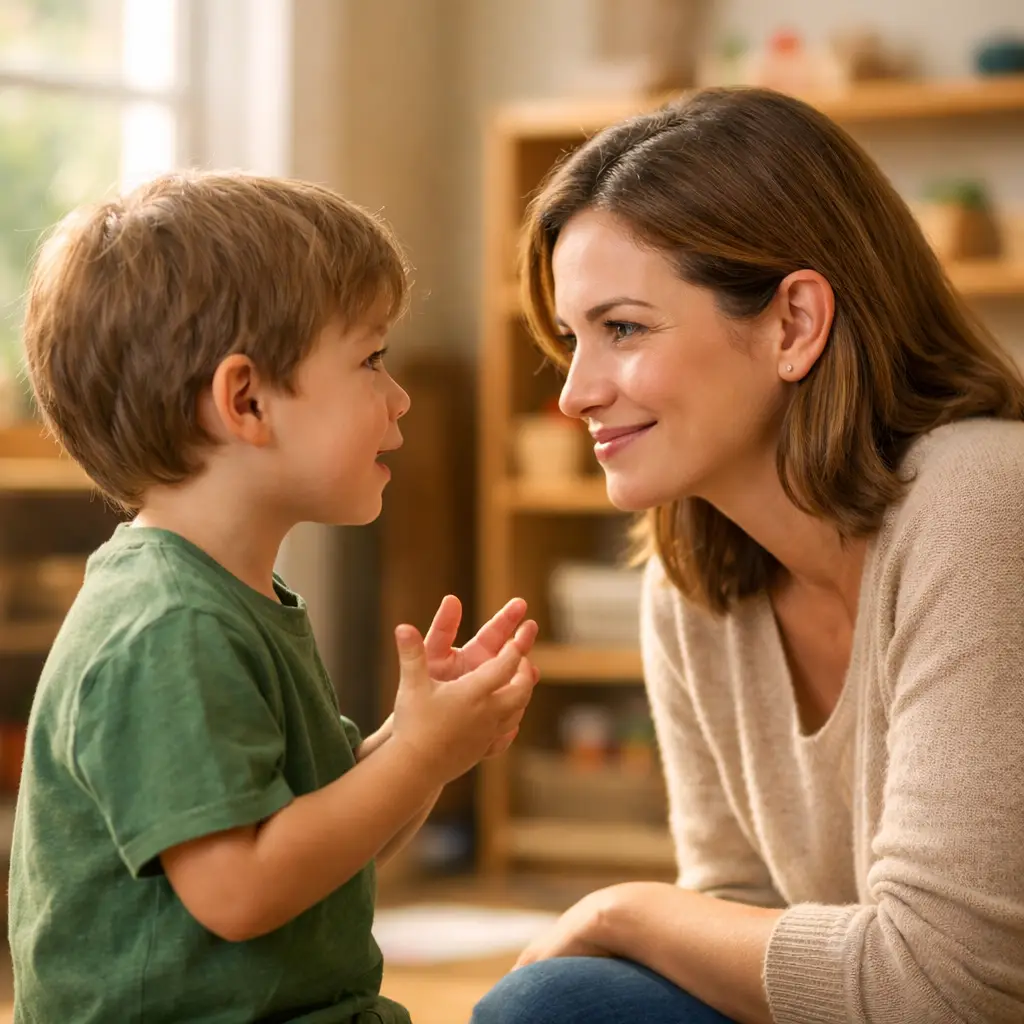
The car ride home or the first few minutes after pickup can feel like the perfect time to connect. Yet when you ask, “How was your day?” many young children answer with a quick “good,” “fine,” or nothing at all. Knowing what to ask your child after school instead of “How was your day?” can make these small moments feel less like a report and more like a warm conversation.
For infants, toddlers, and preschoolers, school is full of new sights, sounds, friendships, choices, and feelings. By the end of the day, they may be tired, hungry, excited to see you, or still processing what happened. A broad question can be hard to answer, especially for children who are still building language. A little patience and a more specific question can help.
Why “How Was Your Day?” Can Be Hard to Answer
There is nothing wrong with asking about your child’s day. The challenge is that the question is very big. A 3-year-old may not know which part of the day to choose, while a toddler may not yet have the words to explain it.
Young children also often reconnect through closeness before conversation. They may need a snack, a quiet ride, a hug, or a few minutes of play before they are ready to talk. Rather than asking several questions right away, try sharing a calm observation first: “I am happy to see you.” This lets your child know that they do not have to perform or give a perfect answer.
In Montessori classrooms, adults observe closely and give children time to respond. This same respectful approach can work beautifully at home. Ask one simple question, then leave room for silence. Your child may answer later while getting dressed, playing, or eating dinner.
What to Ask Your Child After School Instead
The most helpful questions are concrete, open enough for your child to share, and easy to understand. Match your question to your child’s age and personality. Some children enjoy talking about friends; others may be more interested in a material they used, a song they heard, or something they noticed outside.
Try questions such as:
- “What made you smile today?”
- “Who did you play near today?”
- “What did you make, build, or work on?”
- “Did you spend time outside? What did you see?”
- “Was there something that felt tricky today?”
- “What was one thing your teacher said?”
- “What would you like to do again tomorrow?”
For a younger toddler, make the question even simpler and offer a choice: “Did you paint today or play with blocks?” You can also use what you already know from the classroom routine: “I wonder if you had fruit at snack today.” A child can nod, point, add a word, or correct you. All of these are meaningful ways to communicate.
Questions That Welcome Feelings
Children do not always separate events from emotions. A question about a feeling can help them begin to name their experience without making them feel pressured to explain everything.
You might say, “Did anything make you feel proud?” or “Was there a moment you wanted help?” If your child shares a hard moment, resist the urge to solve it immediately. Try reflecting what you heard: “You felt sad when it was time to clean up.” Feeling understood often helps a child settle and may lead to more conversation.
It also helps to avoid questions that assume something went wrong, such as “Did anyone bother you?” unless you have a specific reason to ask. Neutral language gives your child space to tell their own story.
Make Conversation Part of the Routine
The timing matters as much as the words. Some children talk most easily in the car. Others open up during bath time or while helping prepare dinner. You do not need to learn every detail of every day. A predictable, unhurried invitation to talk is enough.
Consider sharing a small part of your own day, too: “I had a busy morning, and I was glad when I took a quiet break.” This models emotional language and shows that conversations go both ways. Keep it brief so your child still has room to lead.
At Montessori Children’s Academy, we value the school-home partnership because children benefit when the caring adults in their lives listen, observe, and communicate. If your child is not ready to talk after school, that is okay. Offer connection first, stay curious, and trust that a gentle question at the right moment can open the door.
Feel free to pass this along to family and friends — and don’t forget to follow us on Facebook for more interesting articles and updates.